
Recycling for your average suburban household in South Africa is not as easy as the infrastructure required for collecting recyclable material isn’t really in place yet.
We have partnered with a lovely gentleman who picks up recyclable materials at Esplendor, making it convenient for you and better for the environment.
When products are recycled they are broken down into their constituent parts and some of those parts, perhaps even all of them, are then used to produce new products.
In order for materials to be recycled and not be
How to recycle in Esplendor
Recycling is picked up on Wednesdays. Please make sure your recyclable materials are ready by Tuesday. You can leave your bag of recyclables in front of Unit 25 on a Monday evening, permitting that it is stacked in a neat fashion and does not obstruct the driveway. This will allow our gardener to prepare the recyclable materials for pick up on Wednesday.
You can contact our caretaker Dawn Willard (Unit 25) to find out more about where is best to leave your recycling.
If you have any ideas on how we can improve this and would like to help out. Please send us an email.
Some tips to help you
The easiest way to recycle is to separate non-recyclables from recyclables. Consider having a bin in your kitchen for each. We are fortunate enough that our recyclable materials get sorted for us, making it even easier to recycle.
1. Metal
Cold drink and beers cans, food tins, aluminium foil, paint tins and aerosol cans can all be recycled. In fact, just about any old metal can. But in your day to day household or office waste, you’ll probably find that you’re most likely going to recycle steel food and aluminium beverage cans.
2. Glass
Glass is completely recyclable.
The following items, however, are not collected for recycling:
Drinking glasses and crystal, light bulbs, crockery and cookware, windscreen
3. Paper
Paper is a renewable resource and most paper can be recycled.
Here are the different types of paper that you can collect for recycling:
● white office paper,
● envelopes and shredded paper
● all types of card board boxes,
● magazines and brochures,
● newspapers,
● wine bottle sleeves, egg cartons, pamphlets and telephone directories.
● juice and milk cartons (see Tetrapak section)
There are some paper products that aren’t suitable for recycling, though.
● Wet or soiled paper or cardboard products, such as used paper plates and pizza boxes, tissues, kitchen roll, and toilet paper;
● laminated, wax coated,or foil lined paper and cardboard;
● punch confetti and carbon paper;
● stickers and Postit notes (because of the glue);
● cement bags;
● dog food bags that are lined with plastic;
● disposable nappies.
4. Tetrapak
Fruit juice and milk containers look like they’re made out of paper, but they are lined with aluminium foil and plastic. They can, however, still be recycled if they have the appropriate recycling logo.
The paperboard pulp can be separated from the polyethene and aluminium in the recycling process and new products can be made or the whole carton can be recycled into new products.
5. Plastic
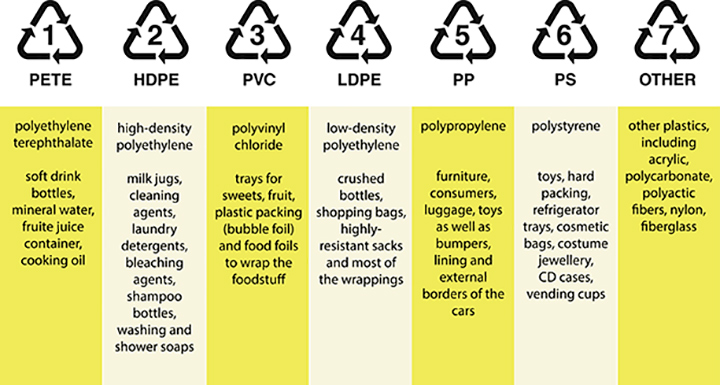
The easiest way to determine whether a plastic product is recyclable is by looking for its recycling logo. There are seven different plastic logos, each representing a different kind of plastic such as PET or polystyrene etc.
You can read more about understanding recycling codes in this article by Karen Wilson-Harris.
6. Electronic Waste
The recycling of electronic waste also has to be done responsibly, so as not to harm the environment or the people doing the recycling. You
7. Batteries
Batteries are a type of electronic waste. Care should be taken not to throw them away with ordinary household waste because they may contain toxic chemicals, such as cadmium, mercury or lead that can leach into the soil and groundwater if they end up in a normal landfill site. In some countries batteries are considered hazardous waste.
8. Biodegradable Material
Food waste in landfill sites creates methane, a greenhouse gas that is worse than carbon dioxide when it comes to causing global warming.
Consider investing in a composting system that suits communal living and a small garden. Products such as a Bokashi bin is a good alternative to throwing away food waste.
Information in this post has been found on Treevolution. Please consider downloading their Guide to Recycling in South Africa.